Showing posts with label fashion. Show all posts

Sunday, November 6, 2011

Little Black Dress


So I'm on the Holiday Party Planning committee for this year's company party. And of course, being an organizer and party planner, I want everything to be perfect.


Aside from making sure the party doesn't resemble a frat boy's 21st birthday (no offense to fraternities or 21 year olds) I want to make sure I look perfect as well. haha

I found this dress on Torrid.com and while I loved it I just wasn't sure if I could pull it off....but after some "fashion consultation" with a few friends I went for it!

The party is happening at a local Wine Bar and Lounge - so nothing fancy (last year it was held at a ballroom) but I still thought I needed something special. After I don't get much chance to put a dress and get dolled up. 

Besides every woman needs a little black dress right?

So it finally arrived and I couldn't wait to try it on (despite not having the proper push-me-pull-you-panties) and here it is (just ignore the look on my face - the flash startled me). 


I'm happy with the purchase and can't wait to wear it to the Holiday Party.  

Now to just accessorize.  I figured a killer pair of shoes and some fantastic earrings should be enough. Although if I can find a new bling-ring I'll be set. 

The other day while Christmas shopping I stumbled on these earrings and of course had to buy them. They'll go great with the dress I think. 


$6.80 at Forever XXI! 
SOLD!


Okay. Shoes time. I haven't really settled on what I want them to look like. I had come across a pair of shoes like this a while back (these are not the exact ones because of course now I can't find them). 

While they are super fun and I'll probably buy them "just because" I don't think they fit with what I'm looking for to wear at the Holiday Party. 

Friday I went to a Payless Shoes and fell in love with these. 


Holy Smokes! I'm in love. They also had them in black....can't I buy both? The red is sooo sexy but the black would go better with the dress. 


Sadly I left without any of them but the woman did say that another shipment of shoes would be arriving Monday. I think I'll have to be going after work and see what they've got in. But my gut says to just get these while I can. 

Soooo cute!!

If you have thoughts, suggestions of links to some killer accessories send them my way!

Saturday, August 27, 2011

Article: What Size Are You, Really?

- Lisa Marsh

Like most new moms, Erin Correale wants to whip her wardrobe back into shape.

Correale has it easier than most. At 38, she’s within 10 pounds of the weight she’s been since her teenage years. But her clothing size isn’t.

“I wear a size two in Ann Taylor, a four in Banana Republic, a six in Old Navy, a four at Coldwater Creek and a friend told me about Chico’s, but told me I would have to look at a size zero,” she says. “I never like size zero—it’s encouraging people to be waifs. That doesn’t make me feel good.”

Sizes zero, two, four and six all for one woman? Is Correale lost in the looking glass, growing and shrinking at every turn like Alice, or is there something seriously askew with the sizing of clothing?

It’s no mistake. The American apparel industry has created an intentional system of “Vanity Sizing.” The increasing use of the smaller sizes—a size 12 in 1970 is now in the size four-six-eight range—is meant to make consumers feel better about buying clothing.

Standards—or Lack Thereof

When it comes to sizing, there are no universal standards. A woman with a traditional hourglass figure with 36-24-36 measurements can wear anything from a size zero to a size ten, depending on the brand and whether it’s sold at the designer, contemporary, junior, bridge or mass level.

The only standard that does exist is to con the buyer into believing she’s smaller. Over time, sizes are getting roomier, allowing women to believe they can still squeeze into a more desirable size two, four, six or even eight.

“At this point, sizes are meaningless. They’re more relative than anything else,” Bill Ivers, chief operating officer of MSA Models told YouBeauty. His agency specializes in providing fit models for designers and brands.

“Sizes are not standard by design,” he explained. “It helps brands be unique and offer an edge over the competition. Brands are looking for brand loyalty and if last season you were an eight and this season you’re a size six, that’s a sales tool. We all look to apparel to make us look good, feel comfortable and confident.”

Even celebrities fall victim to the need for vanity sizing.

One actress cold-called Robert Verdi, style director at FirstComesFashion.com and a celebrity stylist who regularly works with stars like Eva Longoria and Kathy Griffin, and asked him to wardrobe her for multiple appearances during an awards season.

Her publicist said the actress was a size 12, and because they were working on a quick turnaround of less than three weeks, Verdi couldn’t ask designers to make anything custom, so had to rely on pieces designers had in stock.

“We looked at pictures of this woman and I called her publicist back and asked her, is she really a size 12?” he told YouBeauty. “The publicist insisted she was a 12.”

When Verdi and his team packed the dresses up for the trip to Los Angeles, “we snuck in some 14s, 16s and even some 18s.”

Though Verdi told the actress that everything was a “size 12,” the actress “wasn’t happy,” he said. She ultimately wore several of his picks, but one of the dresses was altered to fit by making it six-to-eight inches shorter. The fabric was then added as a panel on the back of the dress so the “size 12” would fit.

“She didn’t want to be bigger than that in her head. A number means so much to so many people,” he added. That's really too bad since the numbers are pretty much meaningless and there are no standards in place.

This lack of sizing standards wasn’t always the case.

Until January 20, 1983, the U.S. Department of Commerce and the National Institute of Standards and Technology offered specifics for the sizing of apparel with body measurements for men, women, junior women, young men and children. These standards began in the late 1940s as a byproduct of the necessity for size-standardization in military uniforms during World War Two. Committees that included textile manufacturers, designers and retailers worked with the Department of Agriculture to determine these sizing standards and all adhered to it.

The program was discontinued in 1983. The measurements were not keeping up with the typical American body, which was changing due to better medicine and nutrition, along with an influx of new and varied ethnic groups. Sponsorship of these standards was assumed by private industry. That marked the start of sizing’s new Wild West, a lawless, volatile environment that continues today.

An End in Sight?

“Each designer has their own vision of what they imagine as the ideal person to wear their clothing,” explained Tanya Shaw to YouBeauty. “Designers will hold true to what they believe.”

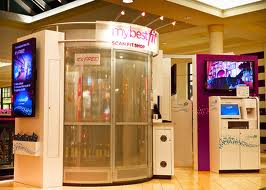
Shaw is the founder and president of MyBestFit, a sizing system that scans your body for about 10 seconds and then provides you with sizing recommendations for styles from over 30 brands like the Gap, Old Navy, Talbots and J Brand.

“We help customers decode sizing and that makes shopping as simple as uniformity,” she explained. “We should find clothes that fit our bodies, not sizes we like to hear.”

The company currently operates one scanner at the King of Prussia Mall in the suburbs of Philadelphia, PA, but will be adding 45 more locations in fall 2011. Though a Personal Shopping Guide from MyBestFit in King of Prussia will only provide resources that are in that mall, you can enter your identifying code on the company’s web site to find what other sizes and brands will fit you when shopping at another location or online.

“When you cut the confusion out, consumers buy more,” Shaw said. “They have told us the conversion rate [from shopper to buyer] of 100 customers is normally 20 percent. With MyBestFit, in some cases, it’s as high as 90 percent. Imagine if you went into a fitting room and it all fit—your shopping time is more productive.”

Cricket Lee is taking it a step further and attempting to get standards back into the lexicon of apparel makers and designers. She founded Fitlogic, a patented sizing system that fits by body type and size. Though it is now accepting pre-orders online for fall shipments, Lee has spent five years struggling to bring it to market. Because each brand has its own sizing, designers and apparel manufacturers weren’t interested.
Her labeling categorizes women in three shape groups—circle, hourglass and triangle—and the Fitlogic label carries the traditional size plus a number for one of these categories.

“The truth will set you free and if you know you’re a size four and shape three, you know a size 4.3 in FitLogic will fit you every time,” Lee explained. “Women don’t have the time to mess with trying on sizes. It is debilitating to walk into a fitting room with 10 pairs of pants and have nothing fit.”

“It’s progress and it will happen,” she added. “If this can reduce return by 75 percent, how can designers and retailers ignore it?”

MSA Models’ Ivers is skeptical that day will come. “There is no universal fit and I doubt that there ever will be. If five people take measurements of the same person, there will be five different measurements,” he said. “Consumers have to learn to adapt to the fact that today you’re a size zero and tomorrow, you’re a four.”

While new mom Correale admits she “loved being a size two at Ann Taylor, I didn’t really believe it.” Shopping certainly isn’t any easier. “I don’t know how to shop other than taking three sizes into the fitting room or having someone run back and forth for me. It never works.”

Shopping woes aside, maybe Lee is correct and the truth will set you free. If knowing that a number on a tag is meaningless will free you from getting hung up on sizes and allow you to focus on the best fit for you, maybe it's not such a bad thing after all.

Friday, July 29, 2011

Female Beauty is an Abomination

(Guardian Article forwarded to me)

L'Oréal's pulled adverts: This ideal of female beauty is an abomination
The lengths the beauty industry and its ugly sister, the fashion industry, go to sell their products are repellent. - by Tanya Gold 

When curves were fashionable - Marilyn Monroe.
Photograph: SAM SHAW / Rex Features
The advertising slogan of L'Oréal is "Because we're worth it". But it doesn't really mean it. If it did, it might include people who look like people in its marketing campaigns. And so the Advertising Standards Authority's decision this week to ban two L'Oréal adverts for deviousness could be the start of something wondrous.

The adverts featured the actress Julia Roberts and the model Christy Turlington promoting Lancôme's Teint Miracle foundation and Maybelline's the Eraser foundation. (Note the use of the word "erase". It means "annihilate".) Roberts is 43; Turlington 42. In the fashion and beauty world, they are as old as Yoda. So beauty did what beauty does; it examined the photographs, observed the flaws and eliminated them. The women emerged improbably radiant and extremely beige. They looked weird and alien and faintly radioactive, like the Ready Brek kids, but with smaller stomachs and longer necks. L'Oréal, the largest and most profitable beauty company in the world, was pleased.

L'Oréal's ad campaign for Lancôme with Julia Roberts

But after a campaign by Jo Swinson, the Liberal Democrat MP, who emerges from this saga like Joan of Arc with a Wet One, the ASA ruled that the adverts misrepresented what the products could do to a normal face. The claims literally had no foundation. Roberts and Turlington had been digitally altered, Turlington to the extent that a piece of skin appeared to be shooting out of her cheek, possibly heaven-bound. L'Oréal pronounced itself "disappointed," which presumably means that if it had a face, its mascara would run on to its chin. The company has form in this. It has received complaints for promoting Telescopic mascara with Penelope Cruz in eyelash extensions and Elvive shampoo with Cheryl Cole in hair extensions, because there is no woman so beautiful, her hairs cannot be extended beyond their human capabilities. The Cruz complaint was upheld; the Cole one thrown out.

I am not against foundation. I take no such political position. To have a face like the bastard child of E.T. and Chewbacca is not my goal, even as I await the emails suggesting my opinions about the beauty and fashion industries stem from my own essential ugliness. A No Grooming Whatsoever manifesto is a straw man I would not touch with a blusher brush. But the lengths the beauty industry and its ugly sister, the fashion industry, run to sell their products are repellent and dangerous. In search of profit, they have created a homogenous ideal of female beauty that has nothing to do with what women actually look like. She is an abomination – starved and plucked and ironed and shrunk; she is the doll that looks like no one. Her goal is to sell dissatisfaction because liking your body sells nothing. Surveys say the majority of women are unhappy with their appearance and I blame the doll for almost all of it.


It has been a slow crawl for the doll. In the 50s and even the 70s – the 60s were a tentative audition for today – a size 12, with hips and breasts, could make it on to a billboard or into a movie. Marilyn Monroe, Jane Russell, Ava Gardner – all had flesh and interesting faces and imperfections. Russell's eyebrows looked like draft excluders and Gardner had a cleft chin you could topple into. They looked like individuals. No more. Models and actresses are tiny now, and curiously similar, with every trace of fat melted off, every shadow painted out. This is not just boring and offensive and a nightmare for people who like to see actresses who can act, rather than pout. It is a mass psychosis, where what is real is despised and what is non-existent is desirable. The camera lies, like never before. I await the first Franken-actress, composed of itinerant body parts glued together with CGI. I hope they don't forget the eyes.

When I attended couture week in Paris last year – an event of such monstrous self-delusion and inanity I will never go again – I stared at the girls because their upper arms were thinner than their lower ones. They looked sick in their hobbling heels and, therefore, as remote as ghosts. They were sallow and spotty; they had created the need for airbrushing themselves, for a want of toast and butter. Even so, very thin hands clapped. I thought the audience was mad to applaud such screaming symptoms of starvation, but no. They are simply immune. They have forgotten what normal people look like. In kinder moments, I can see that fashion people are also victims of their own cracked dreamland. Galliano is daft, McQueen is dead and both Valentino and Lagerfeld look as if they've have had enough plastic surgery to suggest they don't like the mirror, either. They look like unhappy, ageing women: they look like their customers.

Valentino (L) - Lagerfeld (R)
When a model leaves the catwalk and dies of heart failure, or dies of anorexia with the whispered death-bed testimony of what the industry requires on her lips, there is always some chat about banning size-zero women from the shows and a suggestion that fat women (size six?) should be allowed to stagger up and down the catwalks in the stupid shoes. Giorgio Armani said in 2006: "The time has now come for clarity. We all need to work together against anorexia." But watch the fall/winter 2011-12 shows online and see if you think anything has changed. The status quo is re-established as the model goes cold.

Sometimes a product such as Dove will use "Real Women" – that means fat, with non-regular features – in its advertising, but this is gimmickry, a shove for the latest campaign. A normal-looking person in a beauty advert equals a global news story; what else do you need to know? In what you might call corporate altruism, although I call it something else, Dove (property of Unilever) has established a Self-Esteem Fund to help women combat advertising and the eating disorders even Unilever admits advertising creates, because "the average person sees between 400 and 600 advertisements per day," some of which are, presumably, Dove's. But go to their website. You will soon see young, thin models as well as "Real Women". Normal abnormality is re-established, even as the Self-Esteem Fund counts the teenage anorexics on its fingers.

The September Issue, the documentary about US Vogue, included a brilliant scene where the cameraman was photographed for the magazine. Well, not his head. He was presumably too ugly to appear with his head, but his body, all in black, was OK if his paunch was rubbed out. That was Vogue's revenge on the truth-teller: make him thinner, remove his head.

When women, and increasingly men, who are, poor things, the latest victims, see the gulf between the ideal and their own nasty reflections, what happens? Their hatred of their own selves grows – read the innumerable statistics – and vomit rises in the throat of yet more consumers. You can ignore the argument that growing obesity is a sign fashion advertising and beauty advertising has no impact. Anorexia and compulsive eating are twins, not opposites, and both, I think, a response to the doll.

I am thrilled Swinson and the ASA stood up to the doll and knocked her down. It could be the start of something beautiful. Or it could be a scream in the night, because she will be back. She is made of flesh and pixels – and money.

guardian.co.uk © Guardian News and Media Limited 2011

Monday, April 25, 2011

One Size Fits Nobody

I read this and had oh so many thoughts along the way. So to make it easiest I'm going to just color my thoughts/comments as you read along.

One Size Fits Nobody: Seeking a Steady 4 or a 10
By Stephanie Clifford

In one store, you’re a Size 4, in another a Size 8, and in another a Size 10 — all without gaining an ounce.

It’s a familiar problem for many women, as standard sizing has never been very standard, ever since custom clothing gave way to ready-to-wear.

So, baffled women carry armfuls of the same garment in different sizes into the dressing room. They order several sizes of the same shirt online, just to get the right fit. I often times refuse to buy online just because I don't have the chance to try clothes on first - and I don't want to be out the shipping costs. However, then I'm reduced to the limited number of clothing stores/styles/options for plus size women that don't include online shopping.

Now, a handful of companies are tackling the problem of sizes that are unreliable. Some are pushing more informative labels. Some are designing multiple versions of a garment to fit different body shapes. Lane Bryant has this with their pants/jeans. You're either a "square", "triangle" or "circle"...of course I'm none of the three. I've gone in with the same pair of pants in the three different shapes and there's always something not right. Too much sag in the butt, too tight in the stomach, makes my thighs look bigger around then my hips. Etc. And one is offering full-body scans at shopping malls, telling a shopper what sizes she should try among the various brands.

“For the consumer to go out and navigate which one do I match with is a huge challenge, and causes frustration and returns,” said Tanya Shaw, an entrepreneur working on a fit system. “So many women tie their self-esteem to the size on the tag.” Sadly this isn't just because of the frustration of poor labeling. Thank you media.

As the American population has grown more diverse, sizes have become even less reliable. Over the years, many brands have changed measurements so that a woman who previously wore a 12 can now wear a 10 or an 8, a practice known as “vanity sizing.”

In men’s clothes, the dimensions are usually stated in inches; women’s clothing involves more guesswork.

Take a woman with a 27-inch waist. In Marc Jacobs’s high-end line, she is between an 8 and a 10. At Chico’s, she is a triple 0. And that does not consider whether the garment fits in the hips and bust. (Let’s not get into length; there is a reason most neighborhood dry cleaners also offer tailoring.) The length issue is also one of my biggest issues (aside from finding cute clothes in my size). "Averages" are usually at least four inches too long and sometimes petite's turn into high-waters! I'm only 5'1"-5'2" but this shouldn't be that big of a deal.

Ms. Shaw, the entrepreneur, is chief executive of a company called MyBestFit that addresses the problem. It is setting up kiosks in malls to offer a free 20-second full-body scan — a lot like the airport, minus the pat-down alternative that T.S.A. agents offer. Oh great. One more piece of invasive radiation filled equipment to scan our bodies.

Lauren VanBrackle, 20, a student in Philadelphia, tried MyBestFit when she was shopping last weekend.

“I can be anywhere from a 0 at Ann Taylor to a 6 at American Eagle,” she said. “It obviously makes it difficult to shop.” This time, the scanner suggested that at American Eagle, she should try a 4 in one style and a 6 in another. Ms. VanBrackle said she tried the jeans on and was impressed: “That machine, in a 30-second scan, it tells you what to do.”

The customer steps into a circular booth, fully dressed. A wand rotates around her, emitting low-power radio waves that record about 200,000 body measurements, figuring out things like thigh circumference. <- No thanks. I don't need to know how round my thigh is. Thank you though.

Next, the system matches the customer’s measurements to clothes in its database. MyBestFit currently measures clothes from about 50 stores, including Old Navy, Eddie Bauer and Talbots.

Customers then receive a printout of the sizes at each store that ought to fit the customer best. The retailers pay a fee when they appear in the results, but they cannot pay to be included in the results; the rankings are based solely on fit. (The company saves the data, with ID numbers but not names, and may give aggregate information to retailers as feedback.)

Don Thomas, who manages the Eddie Bauer store at the King of Prussia Mall outside Philadelphia, said the system was helpful to shoppers. “Nine times out of 10, if left on their own, they will choose the wrong size pant,” he said. With a printout, “if it says they’re a 4 or a 6, they’re a 4 or a 6, generally. So it’s really good for the customer who’s time-starved, which we all are.”

Ms. Shaw says there are plans for 13 more scanning machines in malls along the East Coast and in California by the end of the year.

The sizing variations are a big contributor to $194 billion in clothing purchases returned in 2010, or more than 8 percent of all clothing purchases, according to the National Retail Federation.

The scanners are a modern solution to an old problem. Studying dress sizes in Vogue advertisements from 1922 on, Alaina Zulli, a designer focusing on costume history, found clothing sizes have been irregular for decades.

A woman with a 32-inch bust would have worn a Size 14 in Sears’s 1937 catalog. By 1967, she would have worn an 8, Ms. Zulli found.

Today, she would wear a zero. I'm sorry but maybe it's because I've never been a size "zero" but I don't know how this can/is a size!?

Plenty of people have tried to address these arbitrary sizes. Advocating a labeling system called Fitlogic over the last few years, an entrepreneur, Cricket Lee, discovered just how difficult it is to change manufacturers’ approach to size.

Her labeling system divides women’s bodies into three shapes, straight, hourglass or bottom-heavy, and a Fitlogic label carries both the standard size and the shape. What about those of us that are two of the three? Or not 100% of any one?

Ms. Lee did tests in the mid-2000s with manufacturers like Jones Apparel and retailers like Nordstrom. But retailers said consumers had trouble grasping the concept. “The manufacturers were so afraid of producing more than one fit in the very beginning,” she said. And that my friends is why we have the muumuu in many plus size stores.

Still, she said, she will soon try to sell the sizing system again.

Some brands are taking their own approaches to make the fitting room less demoralizing. Mary Alderete, vice president for women’s global marketing at Levi’s, said, “When we try on 10 pairs of jeans to buy one, the reason you feel bad is because you think something’s wrong with you.”

Last fall, the company introduced Curve ID, a line that offers three styles, depending on how rounded a woman’s backside is — slight, demi and bold. (Levi’s is now testing a fourth style, called supreme curve.) Each of the three styles includes about 29 fits and colors, and dozens of sizes. Ms. Alderete said the company had sold more than one million pairs of the Curve jeans.

Marie-Eve Faust, the program director of fashion merchandising at Philadelphia University, called the Levi’s effort “a good start.”

“The next step is to have the major players sit together, manufacturers, retailers, brands, and say ‘This type of label should be appropriate for all of us. Let’s standardize,’ ” she said.

Dr. Faust said she had been discussing a new kind of label that takes into account the wearer’s shape, but expected retailers to bristle.

Still, Dr. Faust said, change is needed. This is something I have to agree on. The fact that an obscene number of women are walking around with the wrong bra size on - you can only imagine how many are squeezing into a too tight of dress because they're "always a size 8" or drowning in pants that make them look like they've got a loaded diaper because "they are comfortable".

“It would be nice just to take the pant, look at the label and say, ‘That should fit me,’ ” she said.

Wednesday, April 13, 2011

Beauty at a Price.

At What Price Beauty? Check Today’s Deal
By Tatiana Boncompagni

Jasmine Chess had long wanted to try eyelash extensions, but the high cost had kept them off her beauty shopping list. Then Ms. Chess, 25, saw an offer to buy the service at a reduced rate ($225 instead of the usual $450) on Gilt City, an online portal that sells vouchers to fitness boutiques and spas (along with restaurants and other attractions).

“I wouldn’t have bought this on my own,” said Ms. Chess, an actress who had previously bought a juice cleanse, hair blowout and makeup on the site. “I did it because it was a deal.”

Thanks to the rise of social coupon Web sites such as Groupon and LivingSocial, beauty consumers are able to bargain-hunt for goods and services that were once rarely, if ever, discounted. Recent sales include an oxygen facial at Bliss Spa in South Beach for $112 (30 percent off) on Gilt City and two 60-minute massages at Balanced Health in Boston for $95 (53 percent off) on LivingSocial....

“It used to be, ‘Fifty percent off a haircut, what’s the catch?’ ” said Andrew Unger, a founder of Lifebooker, which began offering deals in late 2007, though it took two years, he said, for consumers to become comfortable with the concept. Since then, “every month has been better than the last,” Mr. Unger said.

According to Yipit, an aggregator of online daily deals, the number of sites offering health- and beauty-related services has nearly quintupled in the last year, to 341, while sales of these services (including spa treatments, dental whitening and hair salon services) reached $78 million for January to March of this year and are on track to reach $312 million for 2011, representing 31 percent of total daily deal sales.

Shopping for beauty services online isn’t something Barbara Fisher, a sales associate for Coach in Manhattan, ever imagined doing, but since hearing about Lifebooker and a half-dozen deal sites through friends, she has bought vouchers for waxing and dental whitening trays and signed up for a free boot camp class...

But are beauty consumers really spending less or just buying more? Jessica Israel, a buyer of television commercial space for an advertising company in Westchester, recently purchased spray tanning, a haircut and a few massages for a discount online, all splurges she would not have tried otherwise....

Yvette Rose, the founder of the Kickstart Diet, said she had more than 5,000 views on her company Web site the day that her deal, 40 percent off a five-day food cleanse, was listed on Gilt City. “I’ve been in Town & Country and Vogue, and neither of them gave me the visibility that Gilt did,” said Ms. Rose, who sold 100 diet packages for $250 instead of the usual $425.

Oscar Blandi, a Madison Avenue hairstylist, offered a highlight and blowout package ($145, down from $275) at his salon on Gilt City last December as part of what he called a marketing strategy to help his junior stylists and colorists build their business. “This gets them in the door,” he said. “It’s up to me to cultivate the client.”

But merchants like Ms. Rose and Mr. Blandi are looking for more than just exposure. More crucial to them is that customers return, and pay full price....

But at what point does a business risk devaluing itself in the name of finding a few new customers? Dr. Steven Pearlman, a facial plastic surgeon who listed discounted prices for chemical peels, laser services, Botox and Juvederm on Gilt City last year, said he would not work with a deal site again for a very long time.

“I don’t want to undercut patients who have been seeing me for years and paying full price, the majority of whom do,” Dr. Pearlman said. “I don’t want to cheapen the brand.”....

Ms. Fisher, the Coach sales associate, said: “Now going to the salon is like getting on an airplane. You don’t know what someone in the seat next to you is paying.” 

*     *     *


I have to admit there's just something golden and alluring about the phrase "__% off". Doesn't really matter what the numbers are- 10, 30, 50 - it calls to me.

I also have to admit to subscribing to more than my fair share of online coupon sites - Groupon, LivingSocial, Sharing Spree and Travelzoo. However, while I may receive many coupons and deals in my inbox they usually end up in my trash right away. Whether it's because I'm not willing to travel over an hour to get my haircut or (like this morning's Groupon) have my "alignment checked".

There have been many times though when the deal is just too good to pass up. A restaurant I haven't tried but has got rave reviews (I'm a yelper too, did I mention?), a 2 for one spa treatment (Mothers Day - check!), a 50% off coupon for a tea shop (perfect give-a-way gift for the tea party themed party I'm hosting)...no they aren't things I would have bought anyway.

In some ways I think of that as the point. Not looking for that "alignment check" deal because I need one anyway and just have been putting it off. It's a luxury. An opportunity to do something nice for myself (or someone else).

What do you think?
Have you bought anything from an online coupon site?
What was it? Was it for you or someone else?
Did you need it or was it a special treat?


Monday, April 11, 2011

Big Beautiful Bombshells.

After this weekends trip into the muumuu and elastic store - I've been feeling more determined to prove that you can be Plus Size and fashionable. I try to avoid frumpy/shapeless clothes, I try to find pieces that accentuate or flatter and mostly I try to have my personality shine through. 


On my lunch break, and browsing various plus-size clothing websites, I came across this page called "Hottest Women in the World: Plus-Sized Edition". 


I couldn't agree more that these women show you can be a big beautiful bombshell (even if some, in my opinion, aren't necessarily "plus-size" or have conformed to the pressure of hollywood and shrunk their size). 


1. Christina Hendricks


2. Mia Tyler


3. Kate Dillon
4. Toccara Jones


5. Charlotte Coyle


6. Maggie Brown


7. Whitney Thompson


8. Barbara Brickner


9. Fluvia Lacerda


10. Justine Legault


11. Crystal Renn


12. America Ferrera


13. Jennifer Coolidge


14. Sarah Ramirez


15. Lizzie Miller


Women who are fashionable (you'll notice not a single muumuu in the batch), who embrace their curves, who don't mind showing you their thighs, stomachs and love handles. My favorite of these 15 is either Mia Tyler or Charlotte Coyle. They just radiate sex appeal and are in no hurry to change their dress size just to please (or appease) the media.


Who are your favorites? (They don't have to be listed above)

No More Muumuus!


Why does the clothing industry think if you're plus size you only wear muumuus and pants with elastic waist bands? Really?!

Thursday, March 31, 2011

The Rebellious Body

The Body Rebellious; Nonconformance and Intersecting Identities in a Movement
by Marianne Kirby

Excerpts (find complete blog by clicking on title above):

"The rebellious body is a nonconforming body, a body that does not play by the rules as established in our dominant mainstream culture. Because the narrow path to acceptability is actually an impossible path, there is no model (and I don’t know if this is true in all other cultures) of how to have a healthful relationship with one’s own body, especially if you are a woman. This is true regardless of size. It receives extra emphasis if you are living and experiencing intersections of oppression – if you are disabled, if you are queer, if you are trans, if you are a person of color, and so on. It receives extra emphasis if you are fat."

"Fat acceptance is for everyone."

"To have unique experiences is how we share knowledge and power with each other. To have unique experiences is how the boundaries of our greater world are determined. It is because our experiences are different that I talk to people – if everyone had my same experience, we wouldn’t have much to learn from each other, would we?"


Wednesday, July 14, 2010

Surviving Plus Size Shops

I started my new job this week and the dress code is “Business Casual”. Nothing new though, most of my closet has “Business Casual” clothes – slacks, blouses, a blazer – but with a new job I thought I’d go shopping for a few new pieces this morning. 

However, the shopping trip just reminded me that even clothing stores dedicated to dressing the Plus Sized Woman don’t have any clue on how to dress their customers.

Floor length dresses and skirts don’t make me look taller.


Large geometric shapes don’t make me look thinner. 


And fish prints on pants just don't really do much for anyone!


I just want to know who in their right mind thought that turquoise and blue fish print capris would look good on any woman let alone a curvaceous one?

Luckily more and more designers today are realizing that plus size women don't want to wear our grandmother's muumuus and have the finances to fill our closets with style. 

The next task is to undo the brainwash fashion tips that have been drilled into our brains....black is slimming, vertical stripes are a good thing, don't wear prints, that larger woman should hide behind their hair and clothes, etc. In the online article "How to Dress Fabulously for Plus Sized Women" by Kiki LaMer some of these myths/misconceptions are addressed and suggestions are made:

However, despite the signs that progress is being made there are still clothing lines trying to sell me items such as:


What are they thinking?

*sigh*